
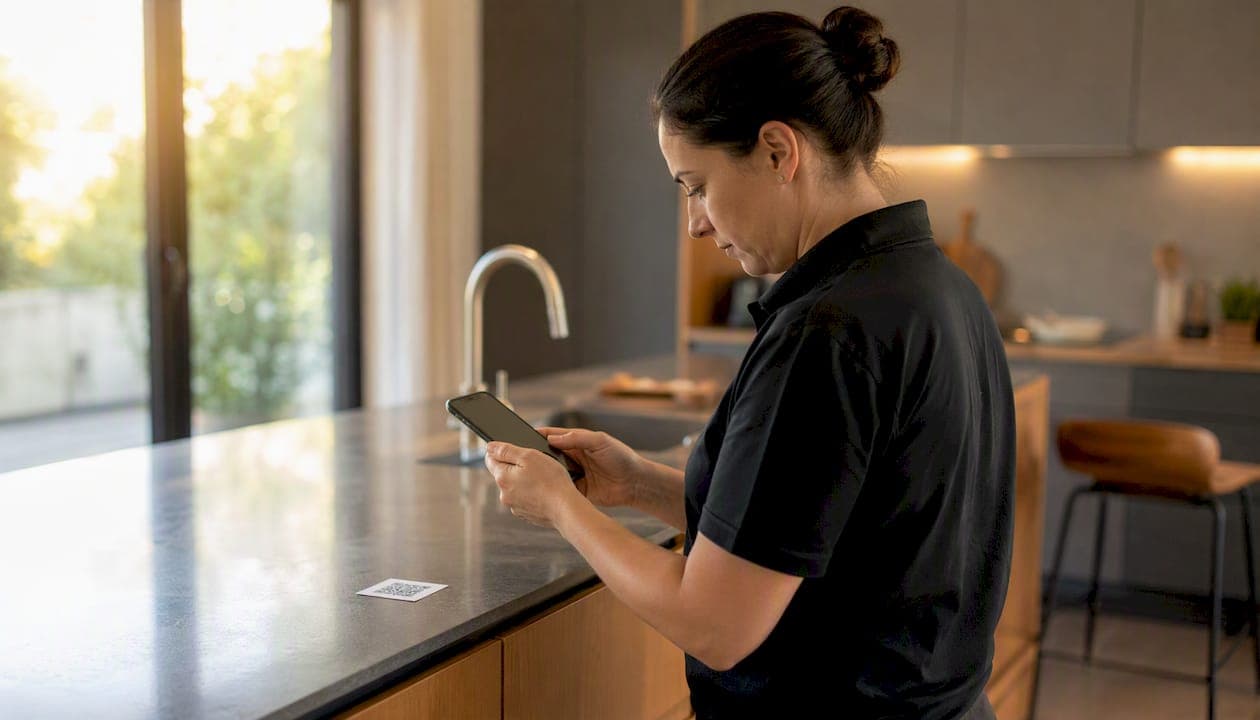
Run turnovers on every guest exit, then schedule a full deep clean every three months or every 20 to 30 turns, whichever hits first, and adjust up for pets, high humidity, or back-to-back bookings. Do three things this week: add a recurring deep-clean job to your calendar or PMS, name a lead cleaner or inspector responsible for signoff, and require photo verification on every single turn starting now.
- Cadence: turnover every guest, deep clean every 3 months or 20 to 30 turns
- Action 1: block recurring deep-clean slots in your booking calendar today
- Action 2: assign one person as inspector, not "whoever's free"
- Action 3: switch on photo-backed verification, even for routine turns
Hosts using a photo-backed inspection step built into the cleaner's own workflow report catching problems before guests do, not after a bad review. That single habit change is where most of this guide starts.
Key Takeaways
A deep clean schedule works when it combines a fixed cadence, clear role ownership, and photo-verified reporting that owners can trust without a site visit.
| Point | Details |
|---|---|
| Set a dual-trigger cadence | Schedule deep cleans every 3 months or every 20 to 30 turnovers, whichever comes first. |
| Watch for escalation triggers | Pets, long stays, odors, and owner requests should bump a standard turn into a deep clean. |
| Assign four clear roles | Cleaner, lead, inspector, and maintenance each need one defined responsibility. |
| Verify with timestamped photos | Photo-backed inspections catch problems before guests do and support damage disputes. |
| Use Turnivia to run the workflow | Turnivia's QR checklists and instant PDF reports save 20 to 40 minutes per turnover. |
Table of Contents
- Deep Clean Schedule Templates You Can Copy Right Now
- When Does a Turnover Become a Deep Clean?
- Who Handles What in a Deep Clean
- How Do You Verify a Deep Clean Was Done Right?
- Building Deep Cleans Into Your Booking Calendar
- What Happens When a Deep Clean Fails Inspection?
- What One Manager Learned Rolling This Out
- Get Your Deep Clean Schedule Running Without the Manual Chasing
- Frequently Asked Questions
- Sources
Deep Clean Schedule Templates You Can Copy Right Now
Two ways to build a schedule: calendar-based (fixed dates) or usage-based (tied to turnover count). Calendar-based is simpler for single listings. Usage-based scales better once you're managing a portfolio, because a high-turnover studio needs deep cleaning far more often than a slow 2BR across town.
Turnover cleans generally run 1 to 3 hours and cost roughly $150 to $300 depending on size. Deep cleans take much longer because they target buildup that a standard turn skips entirely.
Copy-paste starting points by portfolio size:
- Single listing: deep clean the first weekend of every quarter, block two nights, no bookings.
- Small portfolio (2 to 10 units): stagger deep cleans across low-demand weekdays, one property per week, rotating.
- Scaled portfolio (10+ units): auto-generate recurring deep-clean jobs from your PMS, batch by neighborhood or building to save crew travel time.
When Does a Turnover Become a Deep Clean?
A few red flags mean the standard turn checklist isn't enough, and you need to escalate on the spot.
- Stay length over 5 to 7 nights (more wear, more buildup)
- Pets in the unit (hair, odor, accidents you can't always see)
- Heavy cooking smells or evidence of a party
- Visible mildew, grout discoloration, or stains that survived a normal wipe-down
- Repeat guest complaints about cleanliness
- A direct owner request ahead of a big booking or listing photo refresh
Instead of watching the calendar alone, many hosts use the 20-turnover rule: schedule a deep clean after roughly 20 to 30 turns, then move that number earlier for units with pets or in humid climates where mold and odor build up faster.
Pro Tip: If a cleaner flags heavy buildup mid-turn, don't force them to finish in the standard window. Text the owner, reschedule the next guest's check-in buffer if needed, and log the change so it doesn't look like a missed appointment later.
Who Handles What in a Deep Clean
Four roles keep a deep clean from becoming one person's guesswork.
- Cleaner — executes the checklist, room by room, and takes required photos before leaving.
- Lead cleaner or crew lead — manages timing on multi-person jobs and confirms nothing was skipped.
- Inspector or QA — reviews photo evidence, signs off, or flags a redo.
- Maintenance — fixes anything flagged that's beyond cleaning (broken fixture, stuck vent, damaged trim).
A condensed room-by-room deep-clean list, the kind you'd build into a repeatable template:
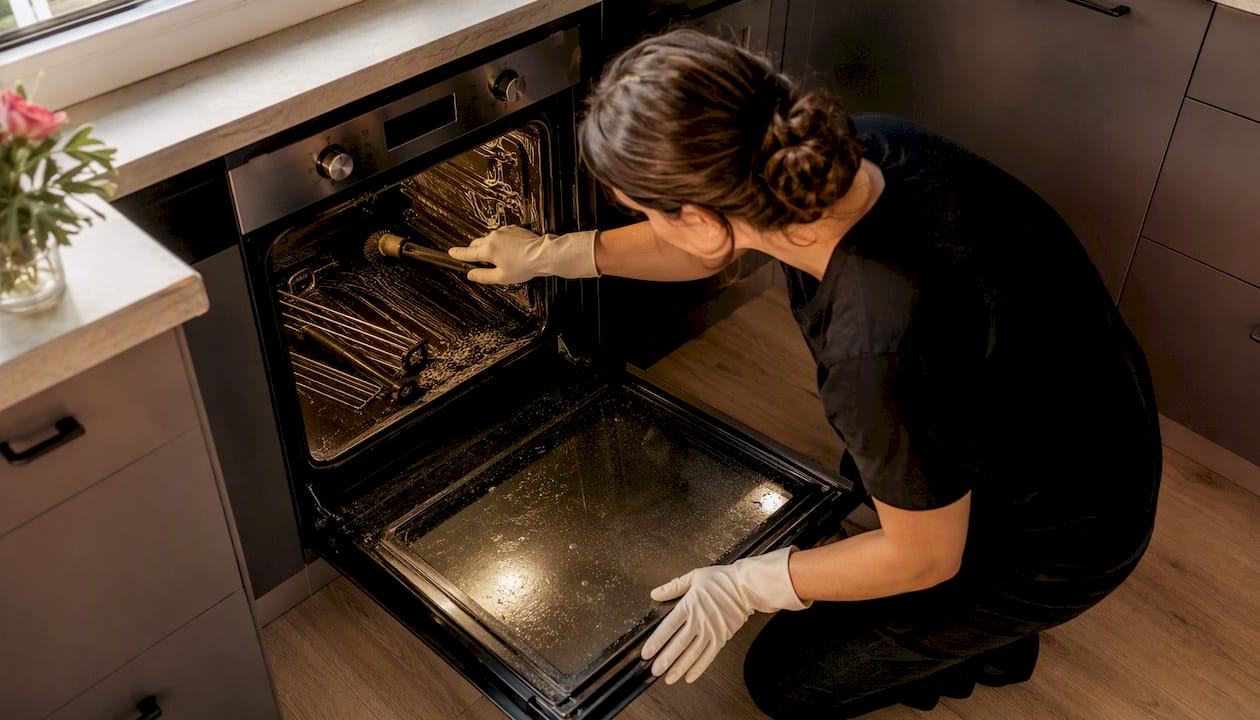
- Kitchen: oven and fridge interiors, range hood filter, inside cabinets, behind appliances
- Bathroom: grout lines, exhaust fan, under-sink cabinet, showerhead buildup
- Living areas: baseboards, upholstery, vents, behind and under furniture
- Bedrooms: mattress rotation check, closet interiors, window tracks
Turnivia's free deep-clean checklist template covers this exact structure and can be adapted per property in a few minutes. Standardizing the checklist and a matching staging photo guide means any cleaner on your team, not just your best one, can hit the same result.
How Do You Verify a Deep Clean Was Done Right?
Verification is what separates a schedule on paper from one that actually protects your listing.
- Take pre-clean photos of any known problem areas, if time allows.
- For longer deep cleans, build in a mid-clean checkpoint, especially with a multi-person crew.
- Require a final, photo-backed inspection before the cleaner leaves the property.
- Generate a report immediately, don't let photos sit on someone's phone for three days.
Photo best practices that actually hold up in a dispute: shoot wide-angle shots of full rooms plus close-ups of high-miss spots (oven interior, grout lines, baseboards), and make sure timestamps are visible or embedded. Hosts using Turnivia's photo verification workflow report saving 20 to 40 minutes per turnover, mostly by cutting out manual photo collection and repeat manager drive-bys.
- Photograph every high-miss area, not just the "hero" shots for listing photos
- Attach a short note to any photo that needs context
- Send the PDF report the same day, not after the next guest checks in
Pro Tip: Mandatory photos plus a locked checklist template cut down on repeat inspections almost entirely. When the cleaner knows exactly what's being checked, first-pass quality goes up.
Building Deep Cleans Into Your Booking Calendar
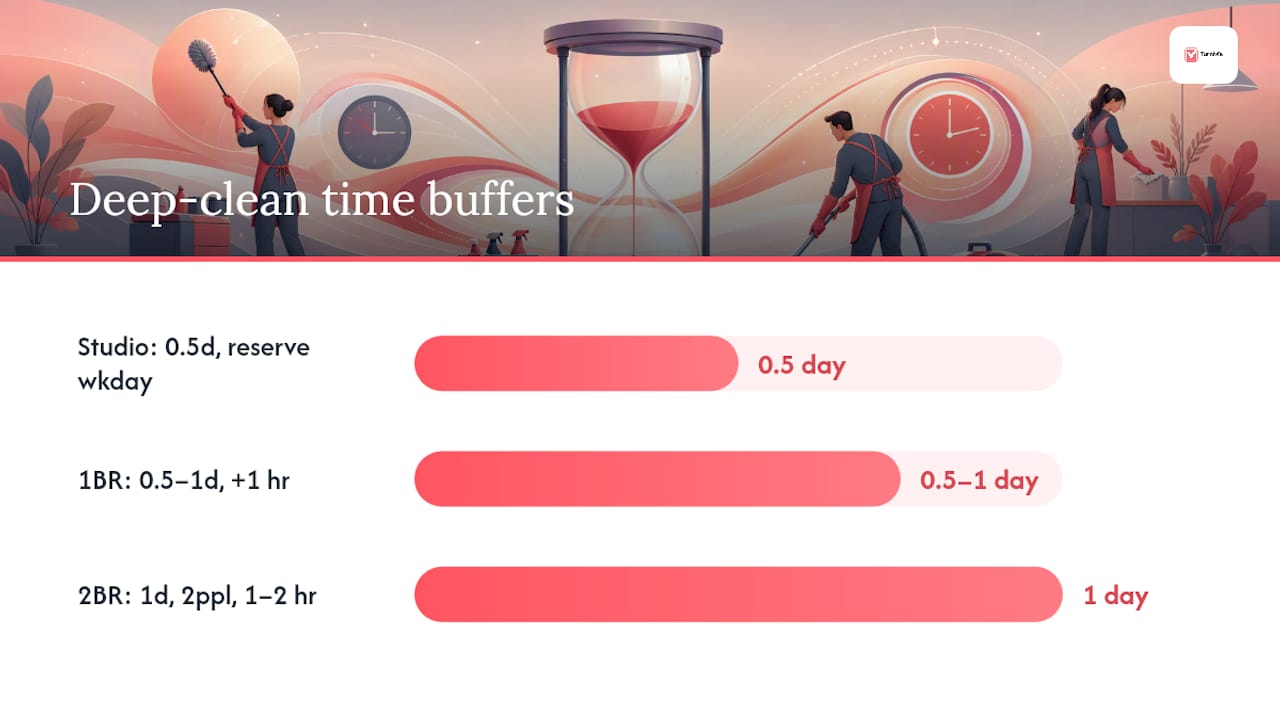
Block realistic time, not optimistic time. A studio deep clean needs a half day; a 2BR often needs a full day once you count appliance interiors and upholstery. Add a contingency buffer, because deep cleans that uncover damage (a stained mattress, a broken drawer) always run long.
| Unit type | Buffer to block | Notes |
|---|---|---|
| Studio | Half day | Reserve a low-demand weekday |
| 1BR | Half to full day | Add 1 hour contingency |
| 2BR | Full day | Two-person crew, 1 to 2 hour contingency |
Sync your booking calendar (iCal or PMS integration) so deep-clean jobs auto-generate on a recurring basis instead of relying on someone remembering to schedule them manually. Reserve your lowest-demand weekdays for deep cleans specifically, since blocking that time protects revenue on your highest-demand nights.
A simple cost formula for budgeting: labor hours × hourly rate, plus supplies, plus a 10 to 15% contingency. That gives owners a number they can actually plan around instead of a surprise invoice.
What Happens When a Deep Clean Fails Inspection?
Not every deep clean passes the first time, and knowing what actually counts as a failure keeps small issues from becoming guest complaints.
Priority order for failures: safety issues first (loose fixtures, exposed wiring), then hygiene (mold, lingering odors), then damage, then cosmetic misses.
- Document the failure with a photo and a short note.
- Create a maintenance job, assign an owner, and set a due date.
- Escalate urgently or block the calendar if the fix can't happen before the next check-in.
Keep every photo and PDF report on file. Timestamped documentation is what protects you if a guest disputes a damage claim, and most platforms only give you a narrow window, often 14 days, to file one.
What One Manager Learned Rolling This Out
Start with your five highest-volume properties first, not all of them at once, and make the cadence recurring in your PMS so it doesn't depend on memory. Success looks like fewer guest complaints and fewer surprise maintenance tickets landing in your inbox weeks later.
Get Your Deep Clean Schedule Running Without the Manual Chasing
Turnivia is built specifically for the workflow this article just walked through: QR-code checklists that need no app download from your cleaners, time-stamped photo verification on every job, and instant PDF reports you can forward to an owner in seconds instead of assembling one from scattered phone photos. Cleaners scan a code, follow the checklist, snap the required photos, and you get a report the moment they're done.
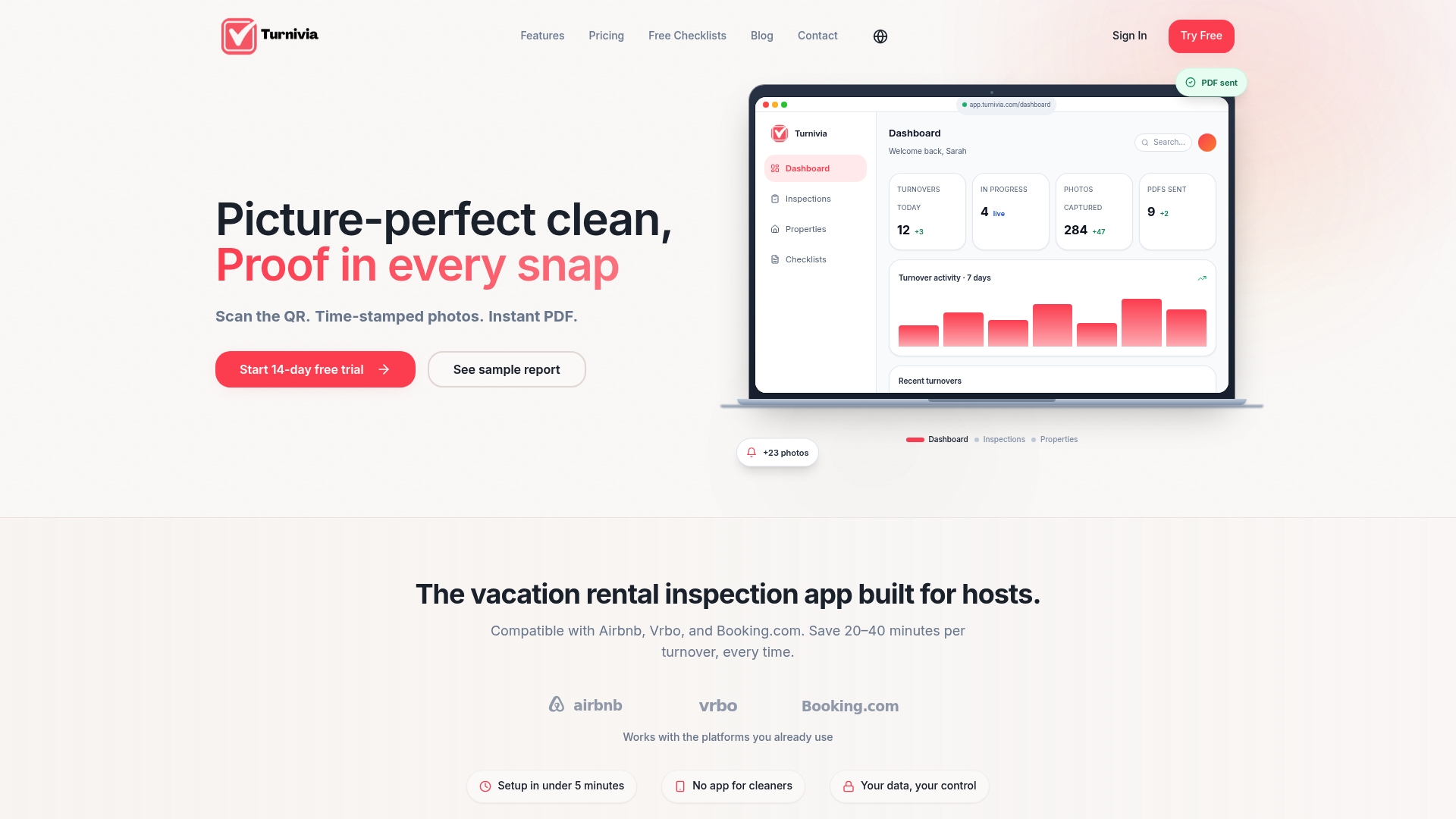
Hosts report the workflow saves 20 to 40 minutes per turnover, mostly from skipping manual photo collection and repeat spot-checks. Getting started takes three steps: start a free trial, import the deep-clean checklist template, and assign your first cleaner by QR code. If you want to see the full feature set first, the Turnivia inspection app page walks through exactly how the QR workflow and reporting fit together.
Frequently Asked Questions
How often should a vacation rental get a deep clean? Every 3 to 6 months on a calendar basis, or every 20 to 30 turnovers on a usage basis, whichever arrives first. Pets, humid climates, and high booking volume all justify moving that frequency earlier.
What's the difference between a deep clean and a standard turnover clean? A turnover clean resets the unit for the next guest in 1 to 3 hours. A deep clean tackles buildup a turnover skips, grout, appliance interiors, baseboards, upholstery, and typically takes half a day or more.
Do I need a separate deep clean vs turnover cleaning schedule for each property? Yes, especially across a portfolio. A high-turnover studio needs deep cleaning more often than a slow-booking 2BR, so track turns per unit rather than applying one blanket date to everything.
How do I verify a deep clean actually happened correctly? Require time-stamped photos of high-miss areas before the cleaner leaves, then generate a report the same day. A workflow like Turnivia's QR-based checklist handles this without requiring the cleaner to install anything.
What should a monthly cleaning checklist include that a weekly one doesn't? A monthly or periodic checklist adds appliance interiors, vent cleaning, grout, and furniture moves, tasks too time-consuming for a routine turnover but necessary before buildup becomes visible to guests.
Sources
- Vacation Rental Turnover Cleaning: How to Nail Same-Day Turns (2026) | Hostfully
- The Complete Guide to Airbnb Turnover Cleaning Operations — Spotless
- Vacation Rental Turnover Checklist: How Airbnb Hosts Can Document Property Condition Between Guests - Veskisoft OÜ
Recommended
- Airbnb Turnover Cleaning Checklist Guide | Turnivia
- 10 Superhost Cleaning Standard Secrets | Turnivia
- How to Manage a Cleaning Team | Turnivia
Created with BabyLoveGrowth to get found on Google and AI search